
Passive or interactive bubble tubes and how to choose between them
Two bubble tubes can look very similar in a photograph and offer quite different experiences. One runs through its colours automatically. Another lets the person using it choose a colour or turn the bubbles on and off.
The useful question is what you want someone to be able to do. Would they enjoy watching a changing display without needing to operate anything? Or would they like to make something happen themselves? Your answer is a better starting point than simply choosing the tallest tube or the package with the most buttons.
What a passive bubble tube does
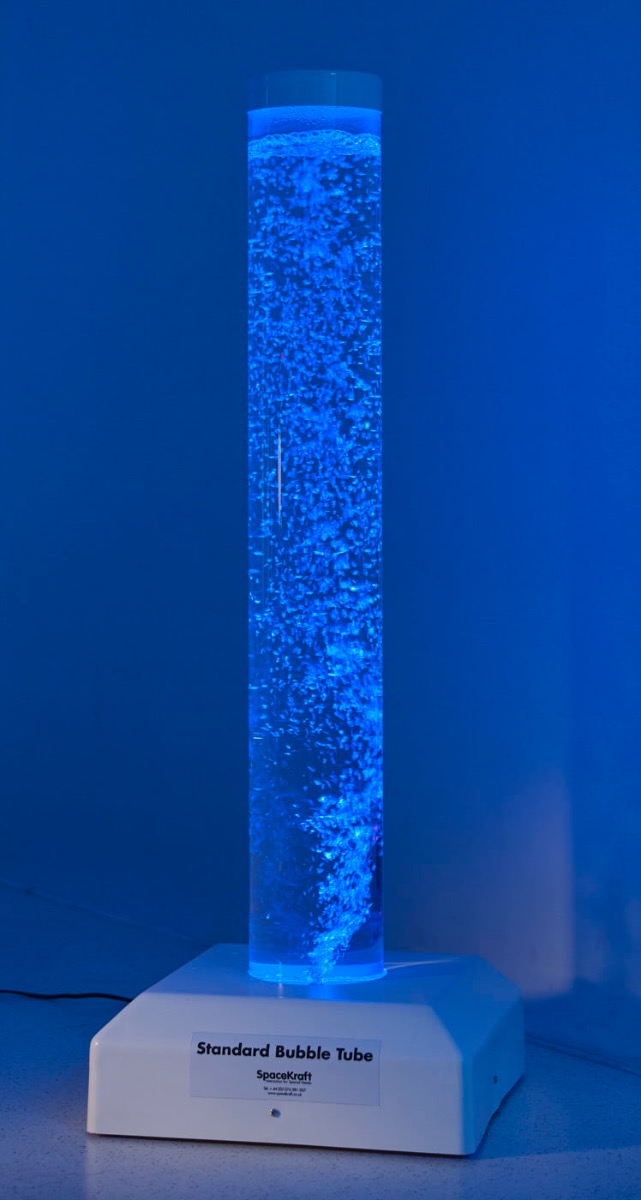
A passive tube provides its display without asking the user to make selections. SpaceKraft's Passive Bubble Tubes combine a colour-changing water column with rising bubbles. The range uses an LED light source and is offered in different visible-column heights.
This may suit someone who wants to watch rather than operate a controller. It can also be a straightforward choice where staff want a visual feature without setting up switch activities. Passive describes the way the equipment operates; it does not mean the person watching must be passive. They might follow the bubbles, talk about the colours or simply spend time looking.
Whether someone enjoys the display is individual. Check their response to the light, movement and operating sound. A product described as calming is not a promise that everyone will find it relaxing.
What changes with an interactive tube
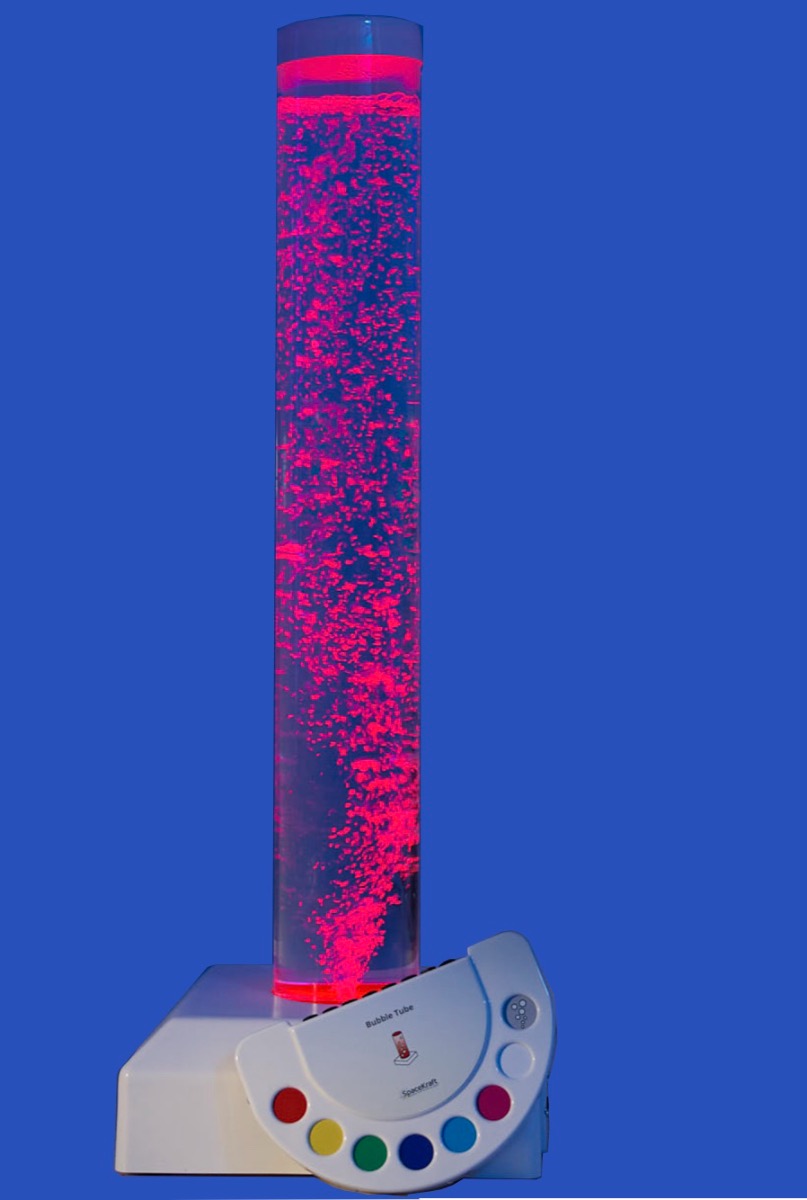
An interactive tube gives the user a way to affect the display. With the Interactive Bubble Tubes and 8 Way Wireless Switch, the listed controller offers a choice of seven colours and control over the bubble flow.
That makes a different kind of activity possible. Someone can press a control and see the result. They can choose a favourite colour or ask another person to take a turn. The equipment provides the opportunity; how it is introduced should fit the person's interests, access needs and communication.
Check the complete setup rather than assuming that any switch will connect. Ask which controls are included, how they are charged, and what is needed if a person uses a separate access switch. Existing equipment in the room may also affect the choice. Give us its model details before ordering so that compatibility can be checked.
Standard bubbles or moving balls and beads
There is another choice besides passive or interactive: what moves inside the tube.
The Passive Ball Bubble Tube contains coloured balls that rise through the inner tube and drift back down. The Passive Bead Bubble Tube uses moving coloured beads. Both give a different visual display from a standard bubble column.
Where possible, look at the equipment running, not just a still picture. Notice how busy the movement feels and how easily the intended user can see it from their usual position. More movement is not automatically a better choice. Someone who enjoys a simple column may not want the added detail of balls or beads.
If you are buying for several people, note their different preferences rather than assuming the choice must be the same for all of them. You may need flexible access to more than one activity across the room, not several versions of the same effect.
Measure the whole setup
The advertised column height is not necessarily the total height of the equipment. Allow for the base or plinth and check the overall dimensions of the exact model you are considering.
Mark the proposed footprint on the floor before ordering. Then consider the space around it. Can a wheelchair user approach comfortably? Is there room for a supporting adult? Can the cleaner and service team reach the parts they need without shifting other heavy equipment?
Mirrors, seating and plinths can change the size of the finished arrangement considerably. A tube that fits into a drawing may still leave the corner awkward to use. Ask for a complete layout if you are combining several items.
Fixings and everyday care belong in the decision
Confirm the required fixing arrangement with SpaceKraft and the person responsible for installation. Do not assume a heavy base means a tall tube can stand unsupported in every setting. Wall construction, access to a suitable power supply and the intended use all need checking.
Also decide who will look after it. Water-based equipment needs an agreed maintenance routine, the correct instructions and suitable consumables. Someone needs to know where those instructions are kept and what to do when the usual member of staff is away.
Ask about ongoing care before buying, particularly if the school already has equipment with different instructions. Follow the guidance for the actual model rather than transferring a routine from another brand or a different type of tube.
A simple way to compare your shortlist
For each option, write down the answers to these questions:
- What will the person be able to watch or control?
- Which controller, accessories and fixings are included?
- What is the complete footprint and overall height?
- How will the person reach or operate the controls?
- Who will install it, and what does routine care involve?
- Can we see or discuss the effect before ordering?
Keep a separate note of anything that is optional. This makes two quotes easier to compare and avoids finding out later that a bracket, plinth or access switch was not included.
When a simpler tube is the right choice
If the person mainly wants an automatically changing visual feature, a passive tube may cover the brief. There is no need to add a controller simply because it exists.
If choosing an effect is central to the activity, or switch access is part of an agreed learning plan, an interactive model is worth a closer look. Ask the people who will use and support it to take part in that decision. A controller that looks easy to an adult may not be accessible from the user's usual position.
Send us your available space, the intended users and any equipment you already have. We can help you compare suitable options and check the practical details before you commit to a particular model.

