
Buying your first switch adapted toy and getting it ready to use
A switch-adapted toy lets someone operate a toy using a separate control that is easier for them to access. Instead of reaching a small button on the toy itself, they may use a larger switch placed where they can comfortably activate it.
The toy is only one part of the setup. The switch, connection, position and way the toy responds all matter. Checking those details before you buy can save a disappointing first session with equipment that does not work together.
Start with something the person wants to make happen
Think about what interests the person. Do they enjoy bubbles, moving objects or a particular sound? An effect that appeals to them gives the switch a purpose. A toy can be technically accessible and still be something they have no interest in using.
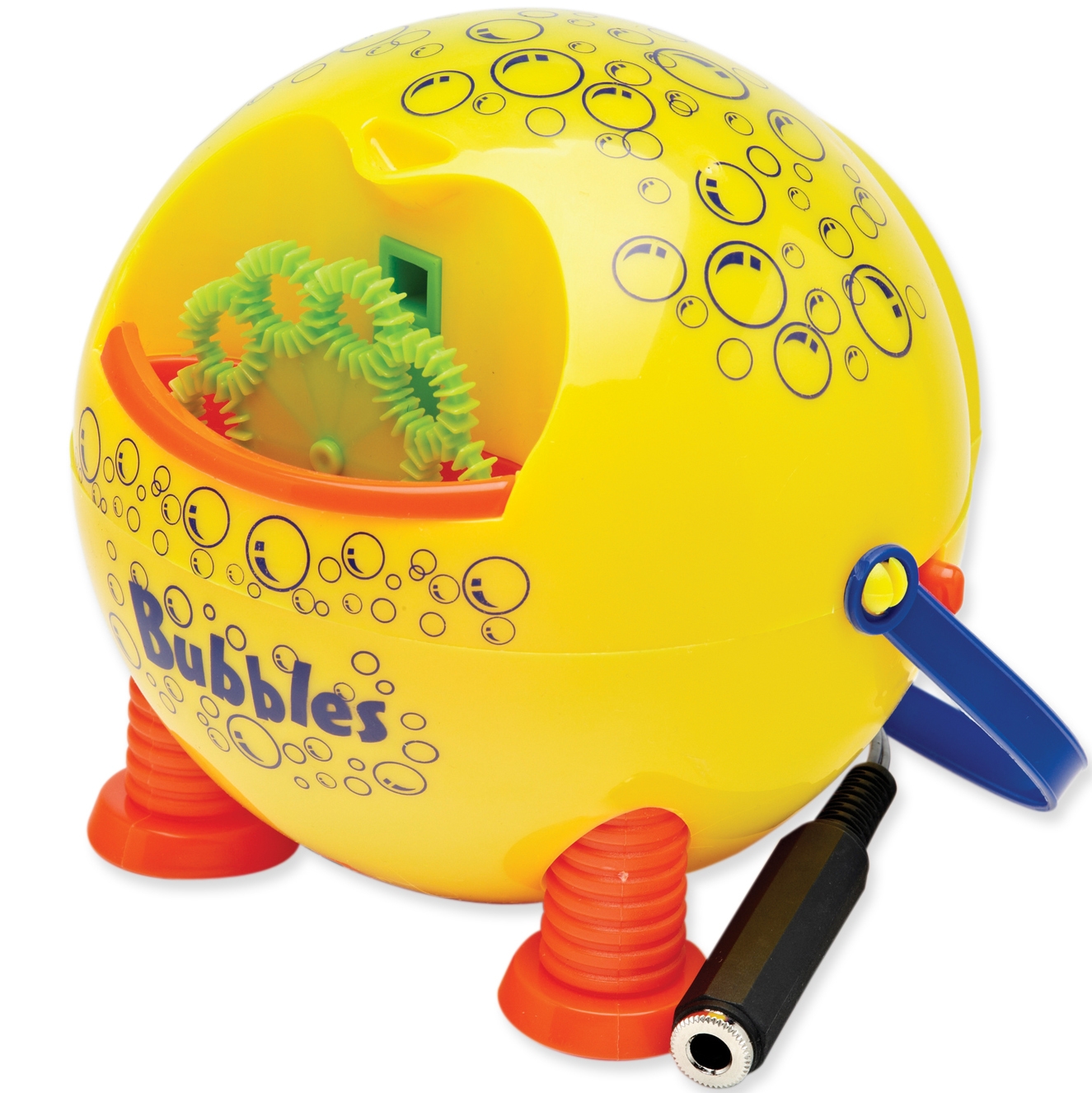
The Switch-adapted Bubble Machine is one example of a toy with a visible result. Its listing states that a separate switch is required. As with any bubble activity, choose a suitable location, supervise its use and deal with spills so the floor does not become slippery.
Keep the person's age and interests in mind as well as their movement. Needing an accessible control does not mean someone wants a toy intended for a much younger person. Where possible, offer a choice of activities and include the person in that choice.
Find a comfortable way to activate the switch
A bigger switch is not automatically easier. Its position, surface and the movement needed to activate it may be more important than size alone. Someone might have good access from one side or position and find another tiring.
Ask the person's occupational therapist, physiotherapist or assistive technology specialist for help where needed. Avoid holding someone in an uncomfortable position or repeatedly moving their hand onto a switch just to complete the activity. Any physical support should follow their agreed plan and respect their willingness to take part.
Smoothie Switches have a low-profile, angled surface and are available in different sizes. That makes them a range to consider during an access discussion, not a universal recommendation. Check the required activation and mounting arrangement against the person's needs.

Check the connection rather than guessing
Switches and toys are not all supplied with the same connection. Matching the appearance of a plug is not enough, and a wireless controller for one system will not necessarily operate another product.
Send the supplier the exact product names or codes for both items. Ask for written confirmation of compatibility and whether anything else is needed. If you already own a switch, a clear photograph of its plug and label can help identify it.
The bubble machine and Smoothie switches linked here are separate examples, not a confirmed bundle. Ask us to check the combination before ordering. Never force a connector into a socket or attempt to modify the wiring yourself.
Understand what happens after a press
Different equipment can respond in different ways. With momentary operation, the effect generally runs while the switch is held. A latched arrangement can allow one activation to start and another to stop. Timed operation runs an effect for a set period after activation.
Those are descriptions of possible modes, not features included with every adapted toy. Some require a suitable controller, and some combinations will not support them. Ask which behaviour the actual setup provides and how it can be changed, if at all.
This matters when someone finds it difficult to hold a switch down or release it. Discuss their access with the relevant professional rather than choosing a mode solely because it seems more advanced.
Check the complete shopping list
Before ordering, confirm:
- The exact toy and the separate switch, if required.
- A verified connection between them, including any approved adaptor.
- The power supply or batteries and whether they are included.
- Any mounting equipment needed to keep the switch safely positioned.
- Consumables, such as the correct bubble liquid for a bubble machine.
- Instructions, supervision requirements and the recommended age or use limitations.
Keep this list with the order. If several staff members are involved, it prevents someone assuming another person has already bought the missing part.
Make the first session straightforward
Set up and check the equipment yourself before inviting the person to use it. Use the manufacturer instructions, make sure cables are safely arranged and confirm that the toy starts and stops as expected. Place it so the result can be seen or heard without having to turn awkwardly.
Introduce one activity at a time. Give the person time to explore the switch and notice what happens. There is no need to fill every pause with another instruction or another demonstration. Inclusive Technology's guide to cause and effect provides further background on using switches for this kind of activity.
Keep any observations simple. Was the switch comfortable to reach? Did the person appear interested in the effect? Could they stop when they wanted? If the activity is part of a learning or therapy plan, share those observations with the professional supporting it.
If it does not work as expected
Start with the ordinary checks in the instructions: power, battery orientation where applicable, plugs fully inserted and the correct operating setting. Test only the combinations approved by the supplier.
If the toy runs but the person cannot easily activate it, the issue may be access or positioning rather than a faulty toy. If nothing happens even when an adult checks the setup, contact the supplier with the product codes and a description of the problem.
Do not open electrical housings or bypass a safety feature. Photographing the external connection and noting the behaviour is more helpful than trying several unverified adaptors.
Once you have a setup that works comfortably, label the compatible parts and store them together. A short handover note explaining the position and settings can make it much easier for the next member of staff or family member to offer the same activity.

